
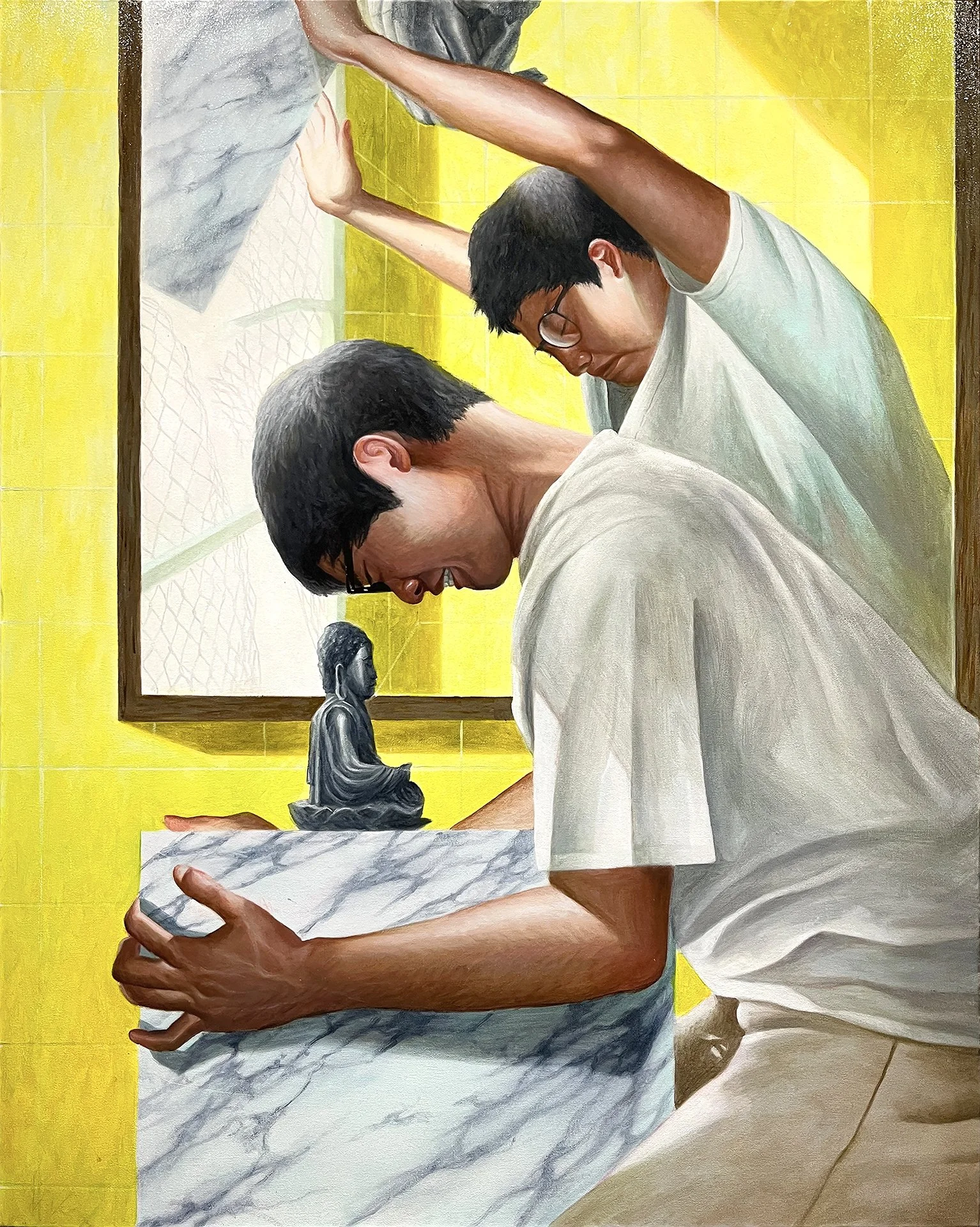
Shattered Samsara (2025), Acrylic on canvas, 100 x 80 cm
KNNCCB (2025), Acrylic on canvas, 40 x 60 cm
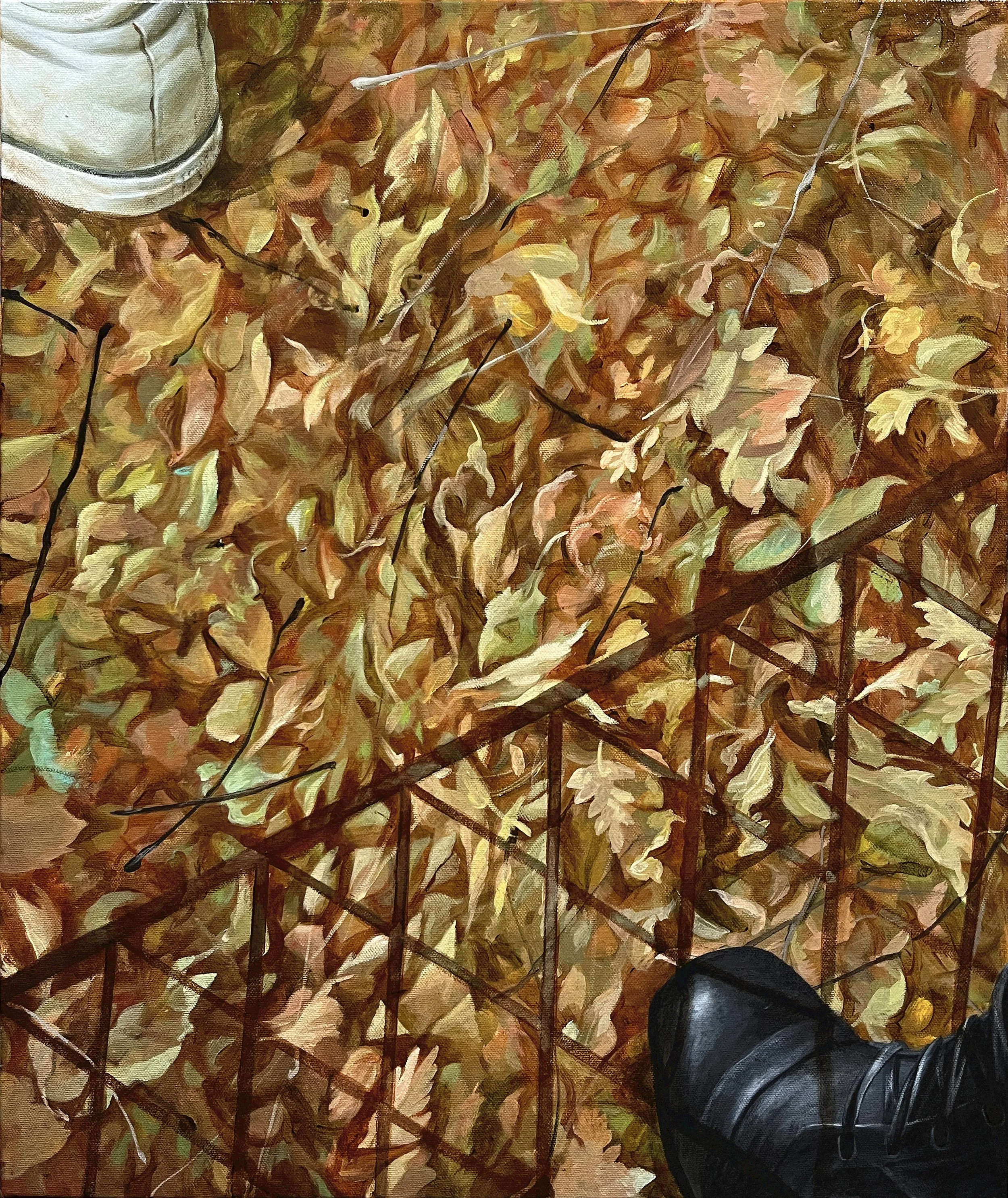
Liberty Feet (2025), Acrylic on canvas, 60 x 50 cm
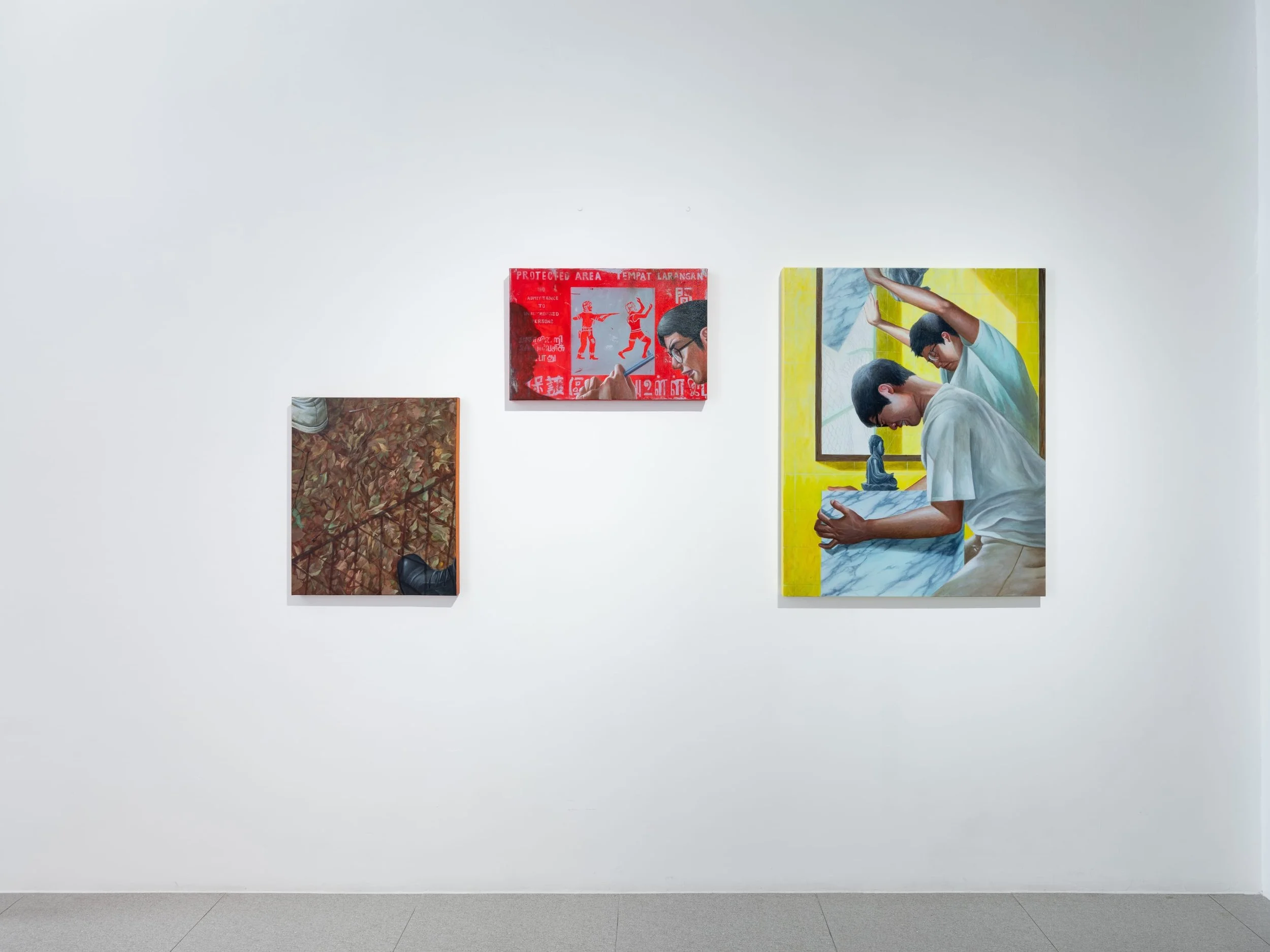
LAH! Stories from the Neighbourhood (2025) installation shot, Cuturi Gallery, 2025
Expanded View
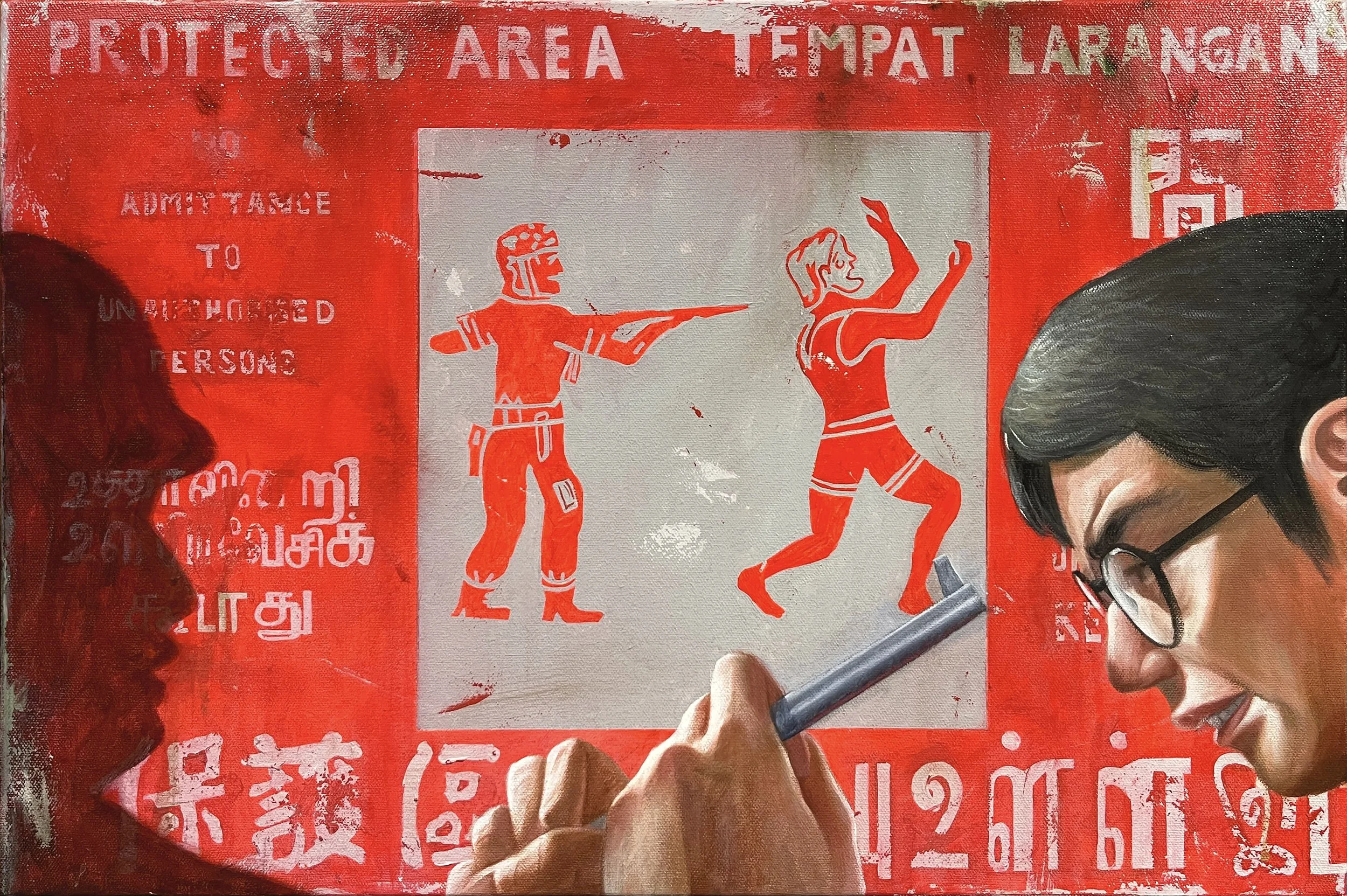
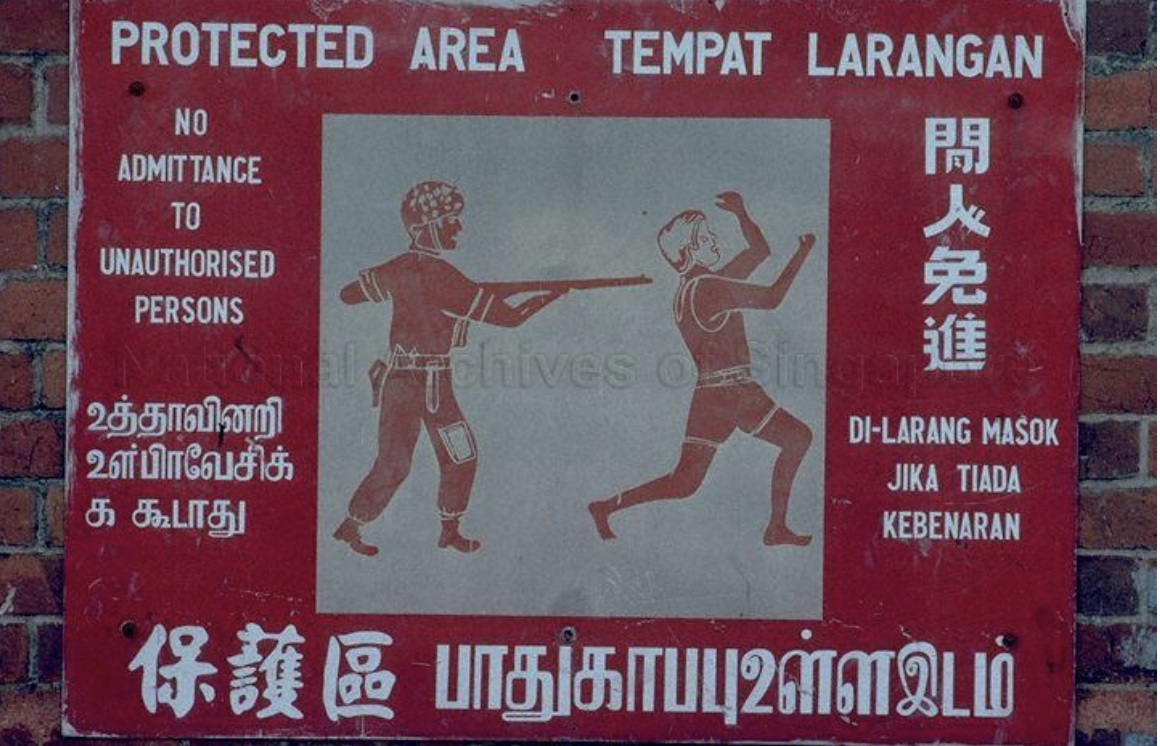
Left: KNNCCB , Right: Vintage No Trespassing Sign from National Archives Singapore
TIn KNNCCB, using an abbreviation for a crude word adds to the sense of provocation, showing the character’s desperation and defiance against authority. The contrast between the foreground, where the character resists the authority figure, and the signage showing the character running away, creates a visual paradox. This contrast highlights the tension between standing up to power and escaping it.
I was inspired by the old-style signage from the National Archives Singapore, which felt quirky and full of character compared to the modern, typical signs we see today. In KNNCCB, I want to show the difference between the trespasser running from authority in the signage and the character resisting authority in the foreground, represented as a shadow.
This raises a deeper question: are the forces we resist rooted in our own internal struggles, or are they external forces of the physical realm?
The final scene of One Flew Over the Cuckoo’s Nest is all about the irony of resistance. McMurphy fights against the system, but in the end, his defiance leads to a lobotomy, and he doesn't get the freedom he wanted. But, his spirit pushes Chief Bromden to finally break free. It’s a reminder that fighting the system doesn't always lead to escape, but it can spark something inside.
In KNNCCB, there's a similar struggle. The character tries to break free by throwing a pedestal at a barred window, but the signage shows them running away from authority, creating this weird paradox. It’s kind of like McMurphy’s fight — resisting, but still caught in the system. Neither running nor fighting seems to work.
Shattered Samsara plays with a similar idea. The figure's attempt to throw the pedestal highlights how hard it is to escape suffering, and even though their reflection shows determination, the pedestal doesn’t move. It’s like McMurphy’s battle: no matter how strong the resistance, some forces just can’t be broken by will alone.
All three works dig into the tension between fighting against external control and dealing with the internal journey to freedom. The question remains: is true freedom about resisting the world around us, or transforming inside?
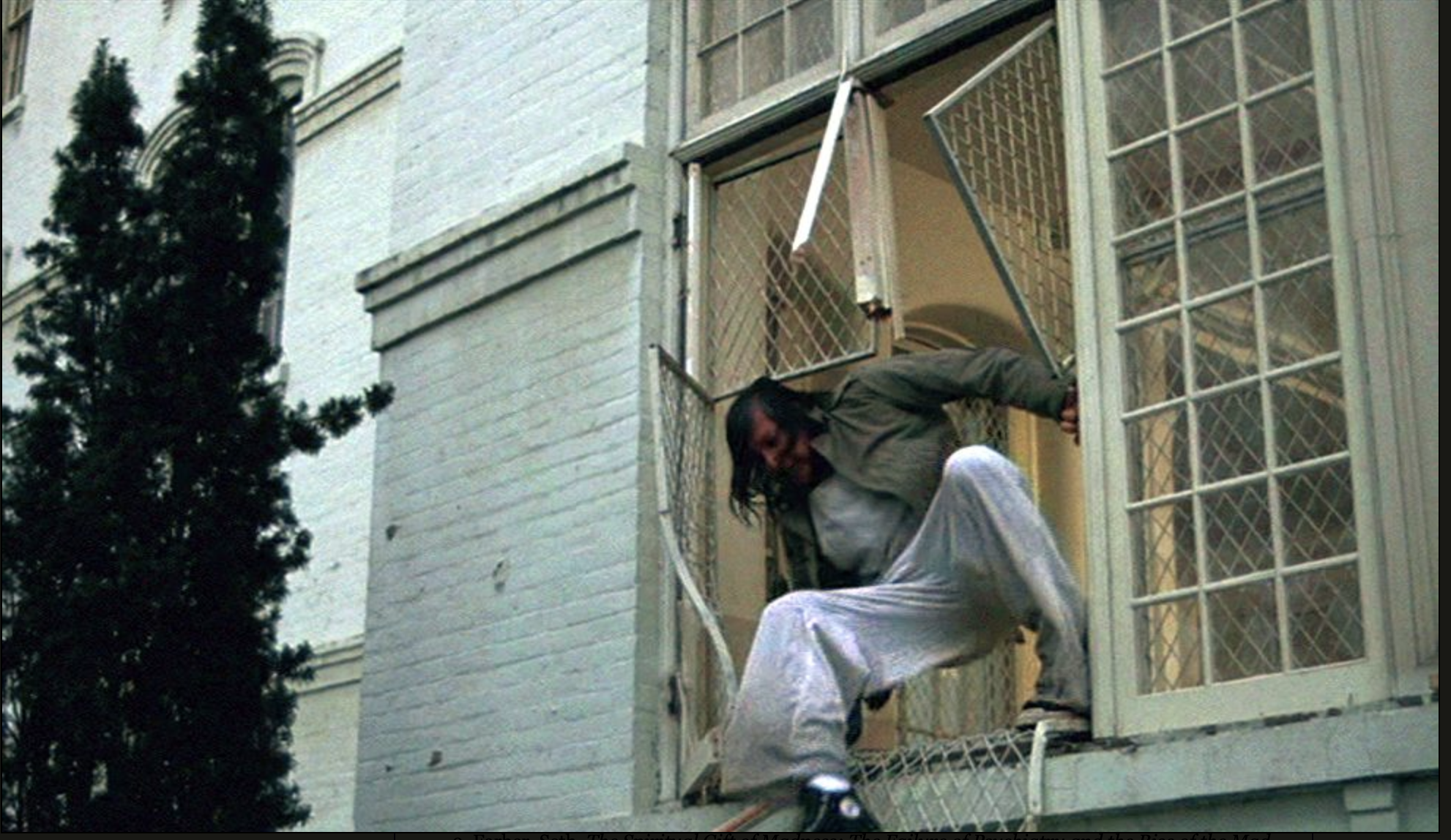
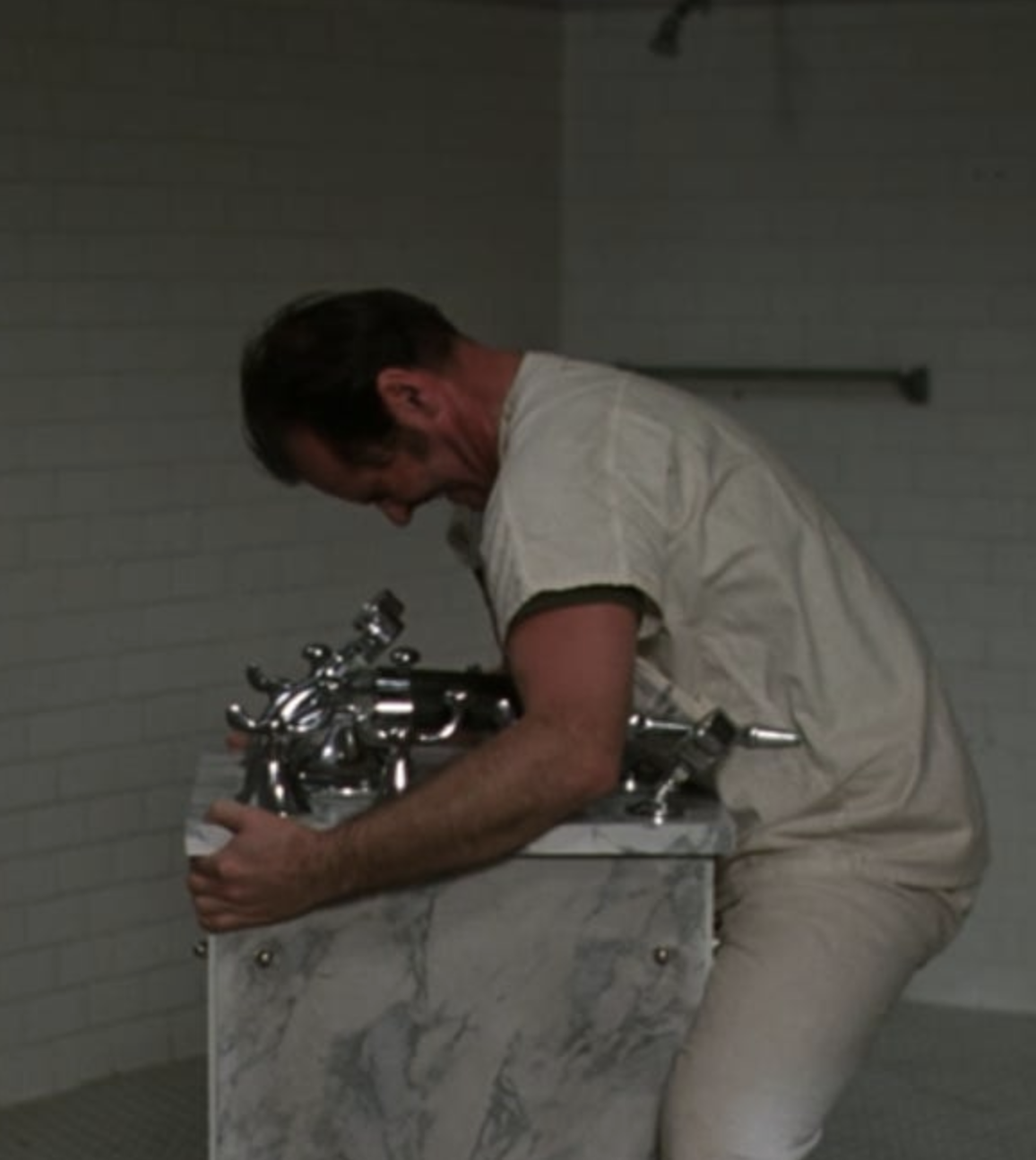
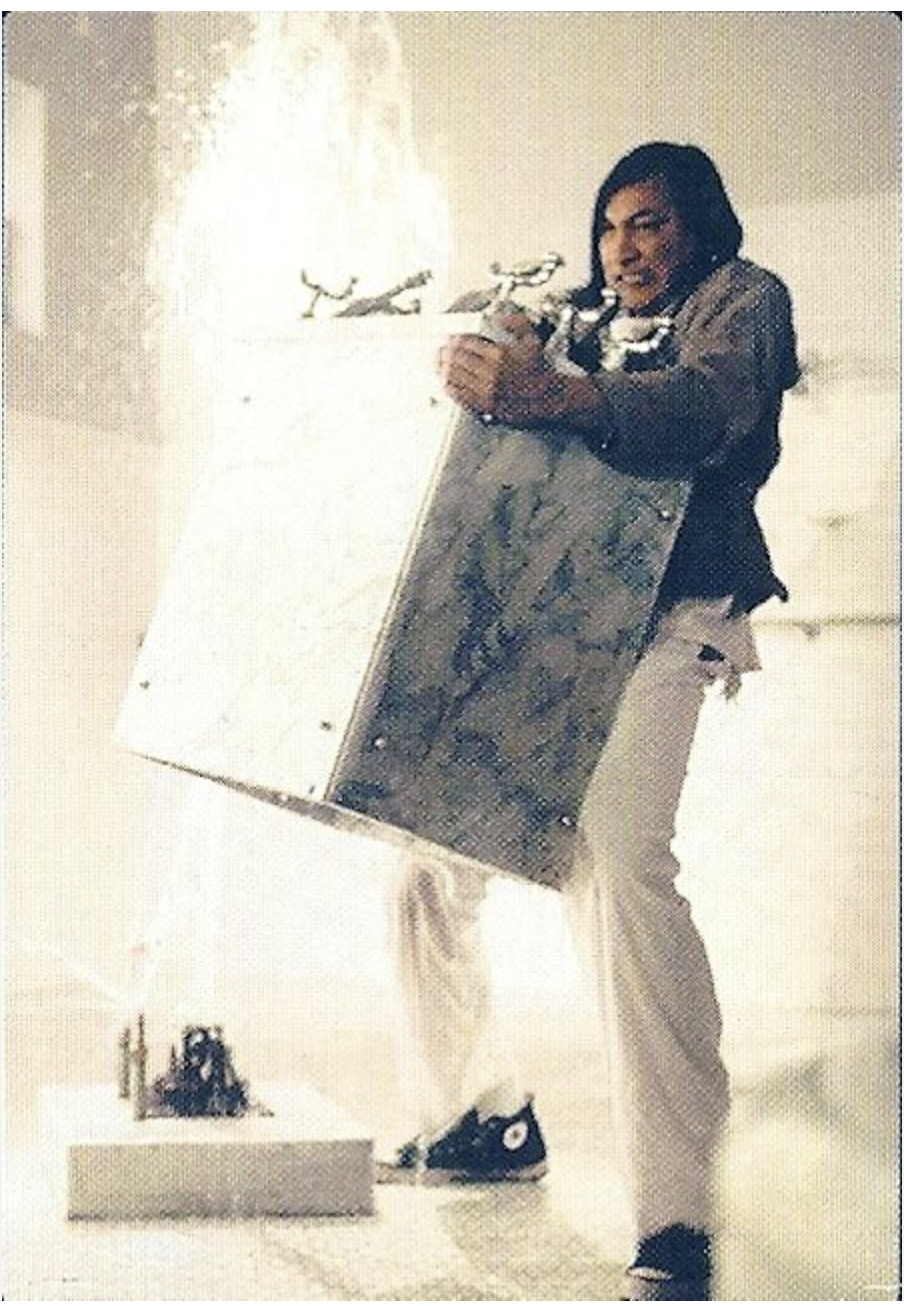
Left: Shattered Samsara , Right:One Flew Over The Cuckoo Nest scene.
In Shattered Samsara, the figure strains to hurl a marble pedestal at a gated window, desperately attempting to break free from his confines. This act of throwing the pedestal is a powerful symbol of resistance, much like McMurphy’s repeated efforts in One Flew Over the Cuckoo’s Nest to defy the oppressive system around him. Both characters attempt to hurl an object — the pedestal in the painting and a heavy water jug in the film — against the barrier that separates them from freedom.
In both instances, the action feels urgent and full of defiance, yet both attempts fall short. The pedestal barely moves, just as McMurphy's efforts to break Nurse Ratched’s control are ultimately thwarted by the powerful system in place. The irony is clear: despite their fierce determination, neither character can break through the unyielding force that holds them back, underscoring the tragic futility of their resistance. Both works highlight the struggle to escape, only to reveal the harsh reality that some barriers cannot be overcome by sheer force alone.
Liberty Feet (2025)
Acrylic on canvas
60x50cm
When we think about Chief Bromden, it's easy to label him as passive, allowing the system to control him for so long. But is he evil? Not at all. His final act — smothering McMurphy to end his suffering — is one of mercy, not cruelty.
It’s a difficult choice, but in the context of McMurphy's journey, it’s an act of compassion. Chief's arc is one of awakening, where he realizes that true freedom is something he must claim for himself, even if it means making painful decisions.
So no, he’s not evil. He’s a man shaped by his circumstances, and in the end, he takes control of his own path, no matter how hard it is.